
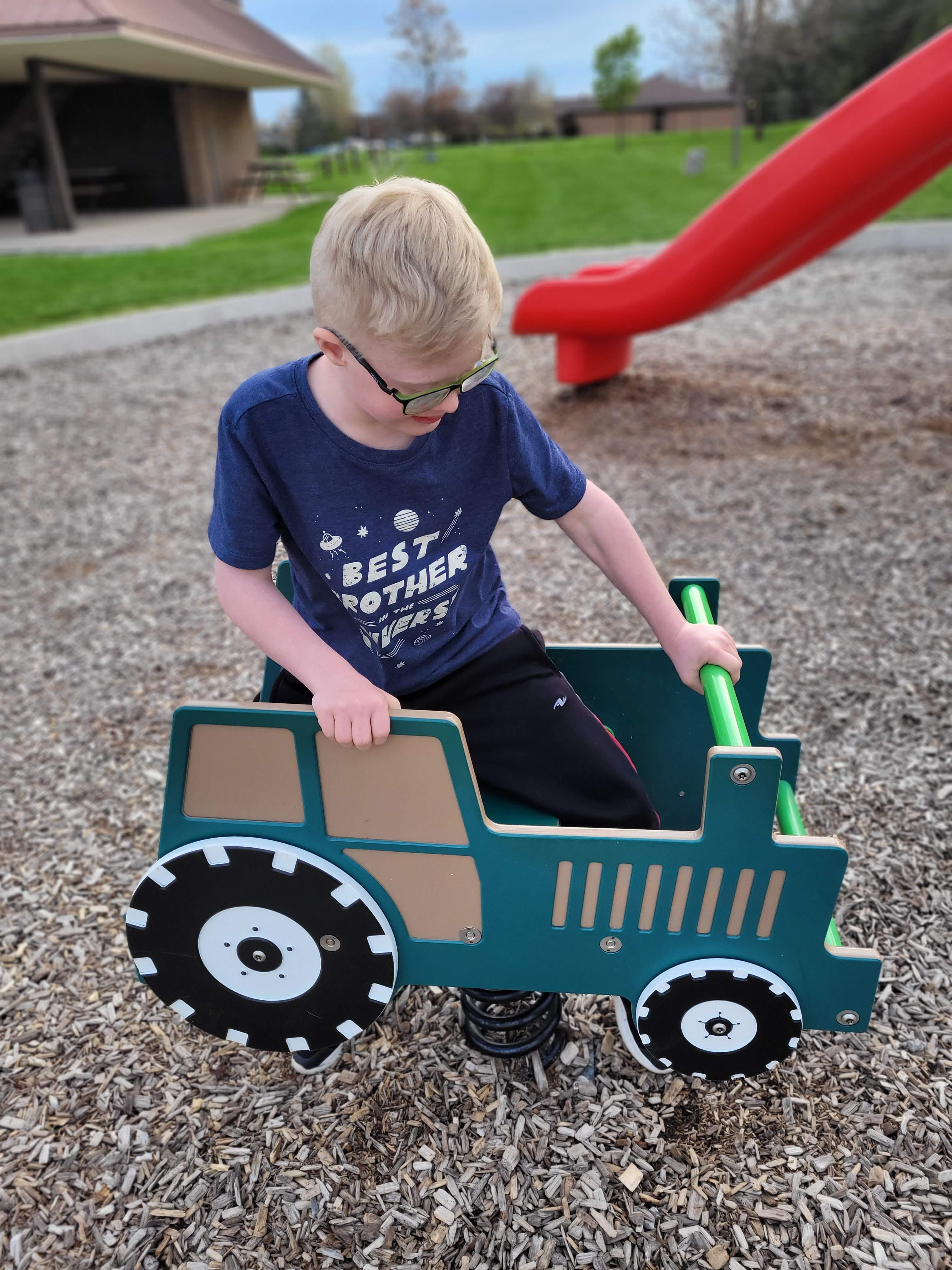
Some days I grieve the “would have been” and “could have been” scenarios of our lives. Not in the way you might expect. I’m not grieving the ways things could have been if Robert didn’t have Down syndrome. I’m grieving the way things could have been different without covid. How things could be different if, as a community, we rallied together instead of pointing fingers.
In a world without pandemic restrictions, with full-time in-person learning, would Robert have been able to form a more solid group of friends? Would the absence of Covid have allowed the programs that benefited him the most to continue unhindered? What would that life look like for Robert? I grieve the life I picture he could have had.
Recently, I found myself sitting in a school meeting, grappling with a difficult decision that I believe should not entirely be mine to make. The more I thought about the choices I had to make, the heavier this grief of what could have been weighed on me. During this meeting, I was told that Robert is struggling to create meaningful friendships with his peers. I was told about his resistance towards certain aspects of school, and urged to consider an academic path that I feel will limit him.
Then it dawned on me. I wasn’t prepared for this sharp change, one that I knew would eventually happen. I knew that the friendships he built in first years of school would not last forever. Those kids would mature at a quicker rate than Robert, and he would likely be left behind and left out.
But I’m not ready for it.
I never expected it to happen so soon. I never anticipated that grade 3 would be the year he would feel left out.
When Robert was just 2 years old, it was easy to dismiss these thoughts. He was social, included, and so dang cute. How could he not win over his peers?
Now, at the age of 9, he’s more timid. His self-confidence likely has taken a hit as he watches his peers do things at three times his speed. While he’s still processing what just happened, his peers have jumped ahead to the next game or subject. His keen sense of observation not missing the fact that they are actively participating in class while he’s pulled aside to work on school subjects he struggles with.
I’m not ready.
I’m not ready to feel the emotions that bubble to the surface when I think about what his days must be like. If his close friend isn’t in class, who does he hang out with? When he has a supply EA or teacher, how does he communicate his needs? Does he feel lonely during recess? Is that why he tells me some mornings he’s sick and doesn’t want to go to school, even if he appears physically fine?
How can a parent ever truly be ready for this? To watch your whole heart walking around, outside of your body, and yet be unable to shield it from pain.
How can we teach resilience and curiosity, kindness and empathy, confidence and self-advocacy in a “post-covid” world? How can we navigate a world where hatred runs deep, as reflected in the bumper stickers on the back of ram trucks, and where funding for critical supports are being cut more and more frequently.
In the face of these challenges, where I feel I am truly not prepared for, I need to dig deep and find strength within not only myself, but the community we surround ourselves with.
I have to focus less on my grief surrounding “what could have been” and more on fostering a sense of togetherness. Let’s rally together and prioritize empathy, kindness, and understanding to create an environment in which people like Robert, can thrive. It’s time as a community to advocate for increased support, both within the school system and society as a whole. By doing this, we pave the way for a brighter, more inclusive future for all. Teach your children to include those with disabilities in their lives. Lead by example and include people with disabilities in your life. Together we can do more. And with your help, I can be better prepared.
 LuckyMama